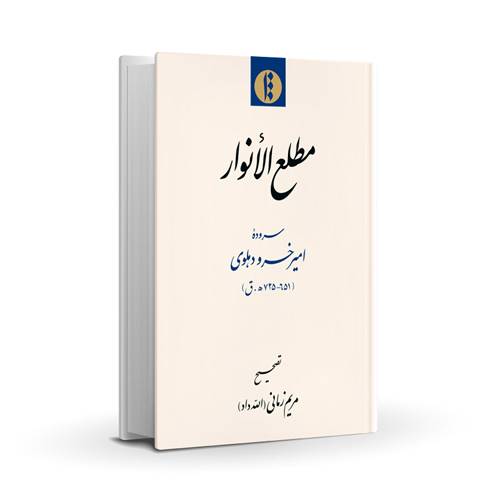
A critical edition of Maṭlaʿ al-Anvār, the finest poetic response to Niẓāmī’s Makhzan al-Asrār, composed by Amīr Khusrau of Delhi and structured as an ethical–mystical masnavī in twenty chapters.
Amīr Nāṣir al-Dīn Abū al-Ḥasan Khusrau ibn Amīr Sayf al-Dīn Dihlavī—known as Amīr Khusrau of India—stands among the most celebrated Persian-speaking poets and Sufi figures of the Indian subcontinent, active from the latter half of the seventh to the early eighth century A.H. Despite a vast legacy in verse and prose, his enduring fame in Iran rests primarily on the masnavīs he composed in emulation of Niẓāmī’s Khamsa.
Among these, Maṭlaʿ al-Anvār is widely regarded by Persian literary critics as the finest nazīra written in response to Makhzan al-Asrār. The poem is organized into twenty chapters, opening with the glorification of God, supplication, and praise of the Prophet. Each chapter adopts an ethical or religious theme and concludes with a brief illustrative tale, achieving a balanced synthesis of moral instruction, mystical reflection, and narrative elegance.
Reviews
Reviews
There are no reviews yet.
Be the first to review “Matla‘ al-Anvar”Cancel Reply



Reviews
There are no reviews yet.