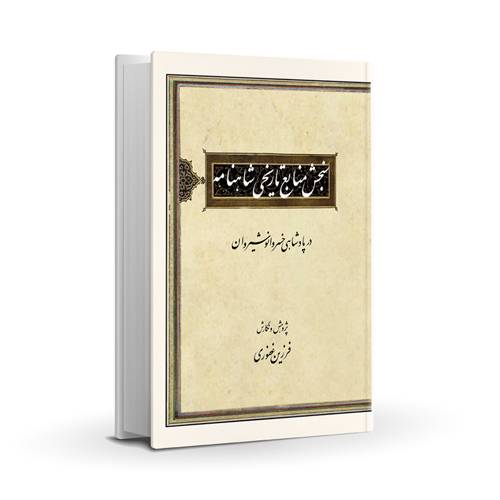
Sanjash-e Manabe ‘-e Tarikhi-ye Shahnameh dar Padshahi-ye Khosrow Anushirvan
$60
You can change the currency from the top section.
Original Title: Sanjish-i manābiʿ-i tārīkhī-yi Shāhnāma dar pādshāhī-yi Khusraw Anūshirvān
A comprehensive source-critical study of the historical materials underlying the reign of Khosrow I Anūshirvān in Ferdowsi’s Shāhnāma, arguing for the poet’s access to specific early Islamic historical sources beyond the Abu Manṣūrī Shāhnāma.
Persian Title: سنجش منابع تاریخی شاهنامه در پادشاهی خسرو انوشیروان
Transliterated Title: Sanjish-i manābiʿ-i tārīkhī-yi Shāhnāma dar pādshāhī-yi Khusraw Anūshirvān
English Title:Assessing the Historical Sources of the Shāhnāma in the Reign of Khosrow Anūshirvān
Author: Farzīn Ghafūrī
Editor: —
Language: Persian
ISBN: 978-600-203-131-0
Publication Year: 2018
Pages: 583
Format: PDF
Category: Textual Studies
Miras Maktoob Collection Code: 319
【Summary】
Research on the Shāhnāma of Ferdowsi has traditionally focused on its literary and epic dimensions, reflecting its status as a masterpiece of Persian and world literature. The present study, however, shifts the focus toward historiography by closely examining the section devoted to the reign of Khosrow I Anūshirvān.
Building on a series of preliminary articles published since 2007, the author demonstrates that the account of Anūshirvān’s reign in the Shāhnāma—comprising more than 4,500 verses (nearly one-eleventh of the entire epic)—contains historically valuable reports that are, in some cases, more reliable than those found in early Islamic historical texts. This observation leads to the central hypothesis of the book: that Ferdowsi had access to a specific historical source, most likely the Kitāb al-Kārnāmaj fī Sīrat Anūshirvān, and that he used this work in addition to the Abu Manṣūrī Shāhnāma to construct his narrative.
The book critically examines this hypothesis through a detailed comparison with early Islamic historical writings, especially Nihāyat al-Arab, Akhbār al-Ṭiwāl, and Tajārib al-Umam. By clarifying the nature and transmission of Anūshirvān’s historiography, this study makes a substantial contribution to Shāhnāma studies, Sasanian history, and the methodology of source criticism in Persian historiography.
Reviews
Reviews
There are no reviews yet.
Be the first to review “Sanjash-e Manabe ‘-e Tarikhi-ye Shahnameh dar Padshahi-ye Khosrow Anushirvan”Cancel Reply



Reviews
There are no reviews yet.