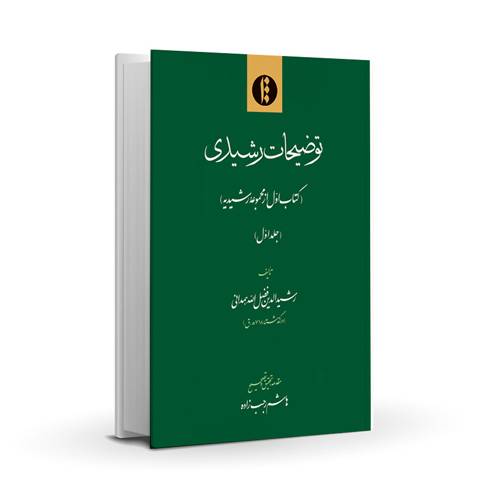
Tozihat-e Rashidi: Ketab-e avval az majmu’e-ye Rashidie (2 vols.)
$114
You can change the currency from the top section.
Original Title:توضیحات رشیدی: کتاب اول از مجموعۀ رشیدیه
A two-volume collection of theological and Qurʾanic treatises by Rashīd al-Dīn Faḍl Allāh al-Hamadānī, addressing key issues in Islamic theology and Qurʾanic interpretation.
Persian Title: توضیحات رشیدی: کتاب اول از مجموعۀ رشیدیه
Transliterated Title: Tawḍīḥāt-i Rashīdī: Kitāb-i avval az majmūʻah-yi Rashīdīyah
English Title: Rashidian Explanations
Author: Rashīd al-Dīn Faḍl Allāh al-Hamadānī (d. 718 A.H.)
Editor: Hāshim Rajabzādah
Language: Persian
ISBN: 978-203-600-057-3 (set)
Publication Year: 2012
Pages: 738
Format: PDF
Category: Islamic Theology and Religious Studies
Miras Maktoob Collection Code: 248
【Summary】
Tawḍīḥāt-i Rashīdī constitutes the first book of a broader corpus of theological and religious treatises written by Rashīd al-Dīn Faḍl Allāh al-Hamadānī, the eminent Ilkhanid statesman, historian, physician, and vizier to three Ilkhanid rulers. Beyond his well-known historical work Jāmiʿ al-Tawārīkh and his scientific writings, Rashīd al-Dīn’s theological treatises represent a substantial contribution to Islamic intellectual history.
These writings, largely preserved in the Rashīdiyya collection and in works such as Bayān al-Ḥaqāʾiq (compiled between 707–711 A.H.), form a rich repository of Iranian and Islamic religious thought, particularly in the fields of Qurʾanic studies and kalām. Tawḍīḥāt-i Rashīdī comprises a preface and nineteen treatises, including interpretations of key Qurʾanic passages—such as Qālū subḥānaka, yasʾalūnaka ʿan al-rūḥ, alastu bi-rabbikum, and the chapters al-Kāfirūn and al-Kawthar—as well as discussions on the nature of the Ascension (miʿrāj), the ḥadīth al-arwāḥ junūd mujannada, the virtues of the Prophet’s illiteracy, and the superiority of intellect over knowledge.
Together, these treatises offer a coherent picture of Rashīd al-Dīn’s theological concerns and his engagement with Qurʾanic exegesis, prophetic tradition, and rational theology within the intellectual milieu of the early 8th/14th century.
Reviews
Reviews
There are no reviews yet.
Be the first to review “Tozihat-e Rashidi: Ketab-e avval az majmu’e-ye Rashidie (2 vols.)”Cancel Reply



Reviews
There are no reviews yet.