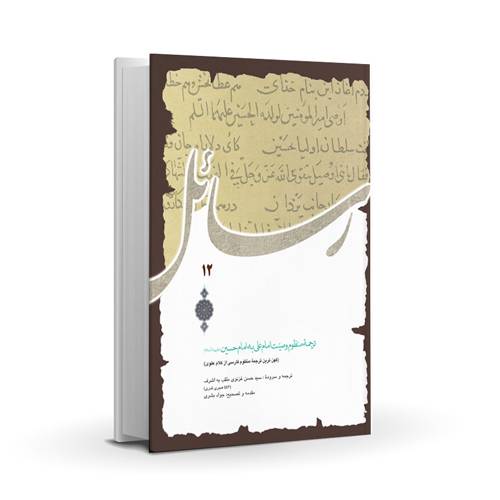
Tarjome-ye Manzum-e Vasiyat-e Imam Ali be Imam Hossein
$60
You can change the currency from the top section.
Original Title: Tarjuma-yi Manẓūm-i Waṣiyyat-i Imām ʿAlī bi-Imām Ḥusayn
The earliest known Persian verse translation of the testament of Imam ʿAlī to Imam Ḥusayn, composed in the early sixth century A.H. by the Ghaznavid poet Sayyid Ḥasan Ghaznavī, known as Ashraf.
English Title: Poetic Translation of Imam ʿAlī’s Testament to Imam Ḥusayn
Author / Translator: Sayyid Ḥasan Ghaznavī, known as “Ashraf” (d. 556 A.H.)
Editor: Javād Basharī
Language: Persian
ISBN: 978-600-203-002-3
Publication Year: 2010
Pages: 117
Format: PDF
Category: Treatises
Miras Maktoob Collection Code: 203
【Summary】
This treatise presents a poetic Persian translation of the testament of Imam ʿAlī to his son Imam Ḥusayn, composed in the early sixth century A.H. by Sayyid Ḥasan Ghaznavī, a distinguished poet of Ghazna active during the later Ghaznavid period. Known by the honorific Ashraf, the poet was himself a descendant of the Prophet’s family and frequently emphasized this lineage in his works.
In this composition, Sayyid Ḥasan renders the Arabic testament into refined Persian verse, offering not a literal translation but a creative and eloquent poetic adaptation. The work was dedicated to Sultan Masʿūd b. Ibrāhīm Ghaznavī and reflects a deeply Shiʿi intellectual and devotional atmosphere, particularly evident in its versified preface.
The language of the poem is notably strong and sophisticated, demonstrating the poet’s mastery of Persian poetic diction and his ability to convey moral and spiritual wisdom through verse. As this work was not preserved within the poet’s collected dīwān, it has been critically edited and restored on the basis of multiple manuscript witnesses. The text stands as the earliest extant Persian verse translation of a foundational Shiʿi ethical text and occupies a significant place in the history of Persian Islamic literature prior to the Mongol period.
Reviews
Reviews
There are no reviews yet.
Be the first to review “Tarjome-ye Manzum-e Vasiyat-e Imam Ali be Imam Hossein”Cancel Reply



Reviews
There are no reviews yet.