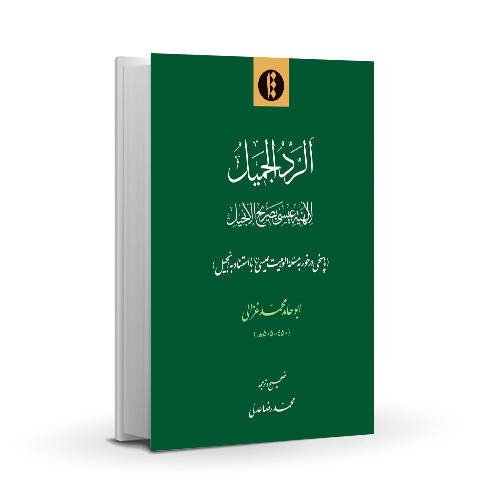
Persian Title: الردّ الجمیل لالهیة عیسی بصریح الانجیل Transliterated Title: al-Radd al-Jamīl li-Ilāhiyyat ʿĪsā bi-Ṣarīḥ al-Injīl English Title: The Elegant Refutation of the Divinity of Jesus Based on the Explicit Gospel
Author: Abū Ḥāmid Muḥammad al-Ghazālī
Editor & Translator: Muḥammad-Reżā ʿAdlī
Language: Persian–Arabic
ISBN: 978-600-203-307-9
Publication Year: 2025
Pages: 289
Format: PDF
Category: Islamic Theology (Kalām)
Miras Maktoob Collection Code: 406
【Summary】
Al-Radd al-Jamīl li-Ilāhiyyat ʿĪsā bi-Ṣarīḥ al-Injīl is a theological treatise traditionally attributed to Abū Ḥāmid al-Ghazālī, in which the author critically examines Christian doctrines concerning the divinity of Jesus by appealing directly to Christian scriptures, particularly the Gospels.
The work advances several core arguments:
(1) miracles attributed to Jesus cannot serve as proof of divinity, since similar miracles are reported of other prophets;
(2) Gospel passages explicitly describe Jesus as God’s messenger, rendering literalist readings in support of divinity theologically unsound and necessitating metaphorical interpretation;
(3) the doctrines of union (ittiḥād) proposed by the Jacobite, Melkite, and Nestorian traditions are conceptually flawed, as the union referenced by Jesus signifies proximity to God rather than incarnation;
(4) honorific titles such as “God,” “Lord,” and “Son of God” function metaphorically and are likewise applied to other prophets and righteous figures;
(5) the Johannine concept of the “Word” (Logos) refers to divine speech or message, not an eternal Son;
(6) Christian interpretations of the Qurʾānic term “Word” (Q 4:171) rest on theological misunderstanding.
This edition presents a critical text accompanied by a Persian translation, making a foundational Muslim polemical engagement with Christianity accessible to modern readers and scholars.
Reviews
Reviews
There are no reviews yet.
Be the first to review “al-Radd al-Jamil le-Elahiyyat-e Isa bar Asas-e Injil”Cancel Reply



Reviews
There are no reviews yet.