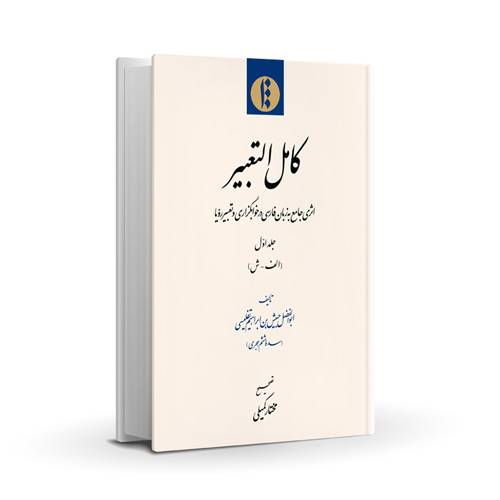
Kamel al-Tabir: Asari Jame be Zaban-e Farsi dar Khabgozari va Tabir-e Roya (2 Vols.)
$114
You can change the currency from the top section.
Original Title:Kāmil al-Taʿbīr: atharī jāmiʿ bih zabān-i fārsī dar khvāb-guzārī va taʿbīr-i ruʾyā (2 jild)
A comprehensive Persian treatise on dream interpretation by Ḥabīsh ibn Ibrāhīm Tiflīsī, one of the most prolific authors of the sixth century A.H., is critically edited based on five manuscripts.
Persian Title: کامل التعبیر: اثری جامع به زبان فارسی در خوابگزاری و تعبیر رویا (2جلد)
Transliterated Title: Kāmil al-Taʿbīr: atharī jāmiʿ bih zabān-i fārsī dar khvāb-guzārī va taʿbīr-i ruʾyā (2 jild)
English Title:The Complete Interpretation: A Comprehensive Persian Treatise on Dreams (2 Vols.)
Author: Ḥabīsh ibn Ibrāhīm Tiflīsī (6th century A.H.)
Editor: Mukhtār Kamīlī
Language: Persian
ISBN: 978-600-203-101-3 (set)
Publication Year: 2015
Pages: 1365
Format: PDF
Category: Persian Language and Literature
Miras Maktoob Collection Code: 279
【Summary】
Ḥabīsh ibn Ibrāhīm Tiflīsī was a prolific writer of the sixth century A.H., whose works span a wide range of disciplines. Among his many writings, Kāmil al-Taʿbīr stands as his most renowned contribution, devoted to the science of dream interpretation (taʿbīr al-ruʾyā).
Following an extensive and informative introduction on the principles of dream interpretation, the author proceeds to analyze dreams and symbols alphabetically, drawing on the authoritative opinions of earlier interpreters such as Ibn Sīrīn, Ibrāhīm Kirmānī, and others. The language of the work, consistent with Tiflīsī’s other writings, is clear and accessible, while incorporating several Azerbaijani and northwestern Iranian lexical elements.
Although Kāmil al-Taʿbīr has been printed numerous times, previous editions are marred by significant errors and diverge considerably from the author’s original text. The present edition offers a reliable critical text established based on five manuscript witnesses, restoring the work to a form much closer to Tiflīsī’s original composition.
Reviews
Reviews
There are no reviews yet.
Be the first to review “Kamel al-Tabir: Asari Jame be Zaban-e Farsi dar Khabgozari va Tabir-e Roya (2 Vols.)”Cancel Reply



Reviews
There are no reviews yet.